


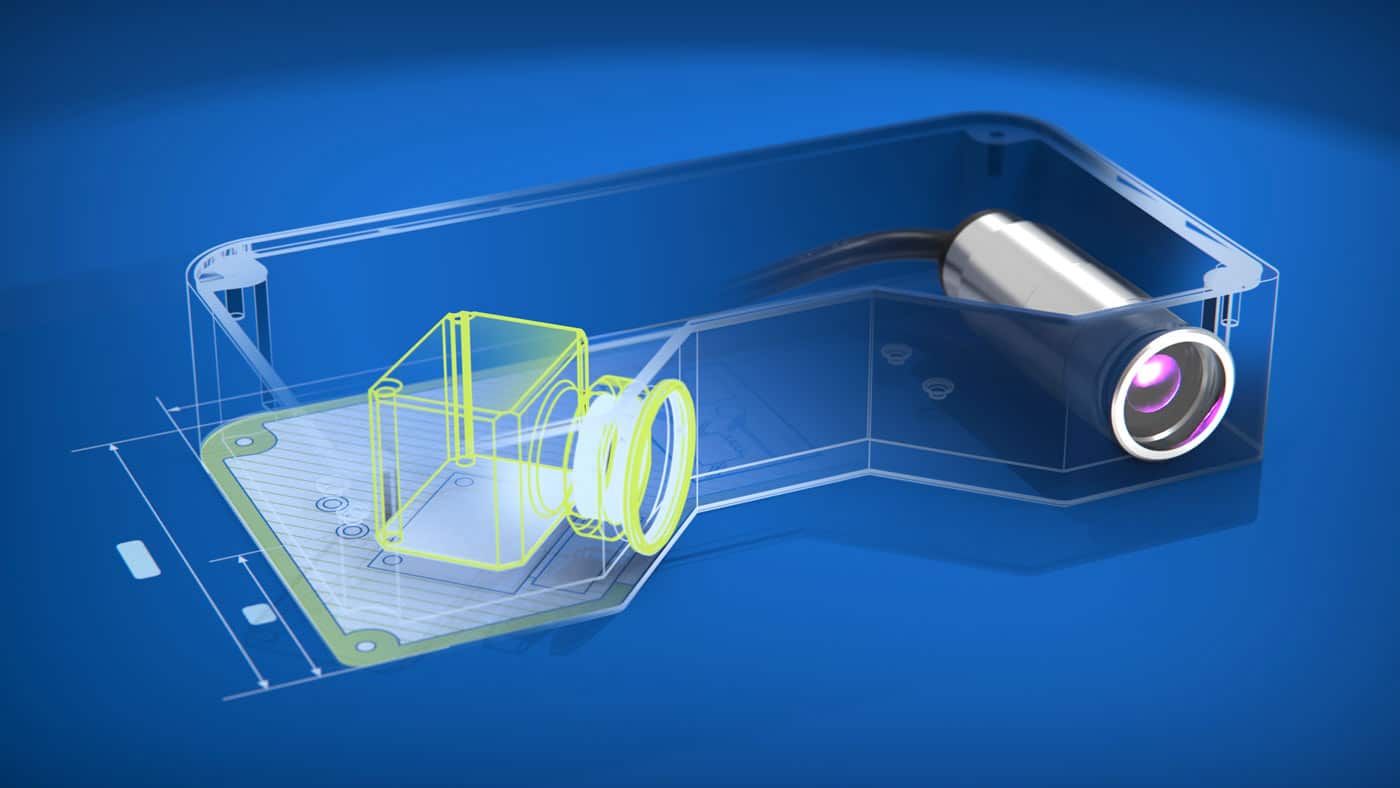
Modern automotive production places high demands on process reliability, efficiency and precision. To meet quality requirements while increasing productivity and shortening cycle times, many manufacturers rely on laser projectors for worker guidance as well as machine vision systems. Z-LASER laser solutions support the entire process chain in automotive manufacturing – from bodywork operations and interior assembly through to logistics – by standardising manual tasks, reducing errors and helping to make production reliable and repeatable.
Welding and Bodywork Operations
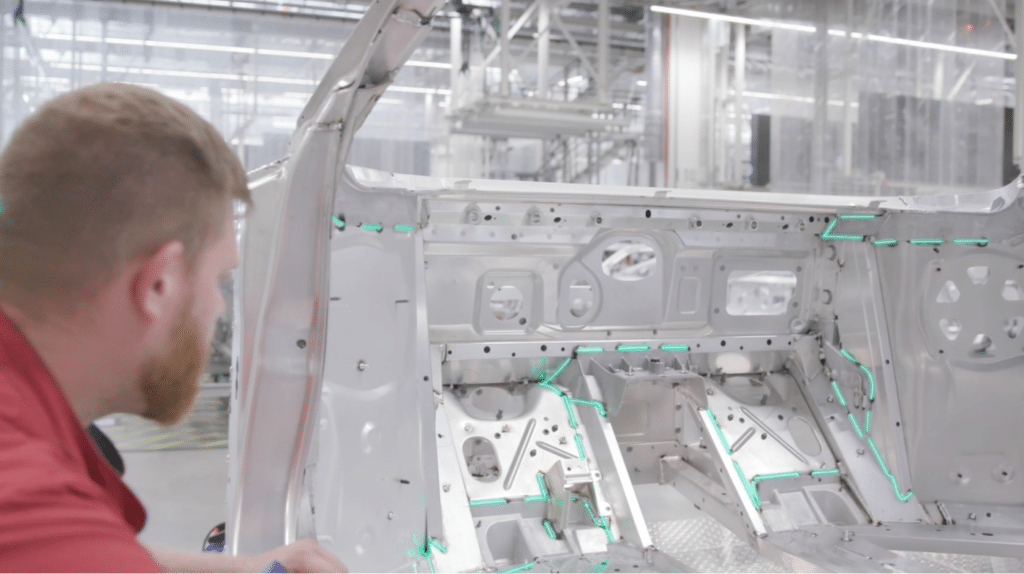
Welding body components requires the highest level of accuracy. A range of welding processes is used, and the structural integrity and safety of the vehicle depend directly on the quality of each individual weld seam. Here, laser lines used for machine vision support quality control by comparing the actual weld seam paths with the specified target geometry. The completeness and correct position of weld points can also be checked automatically, enabling full traceability and documentation.
Interior Assembly: Visual Worker Guidance with Laser Projection
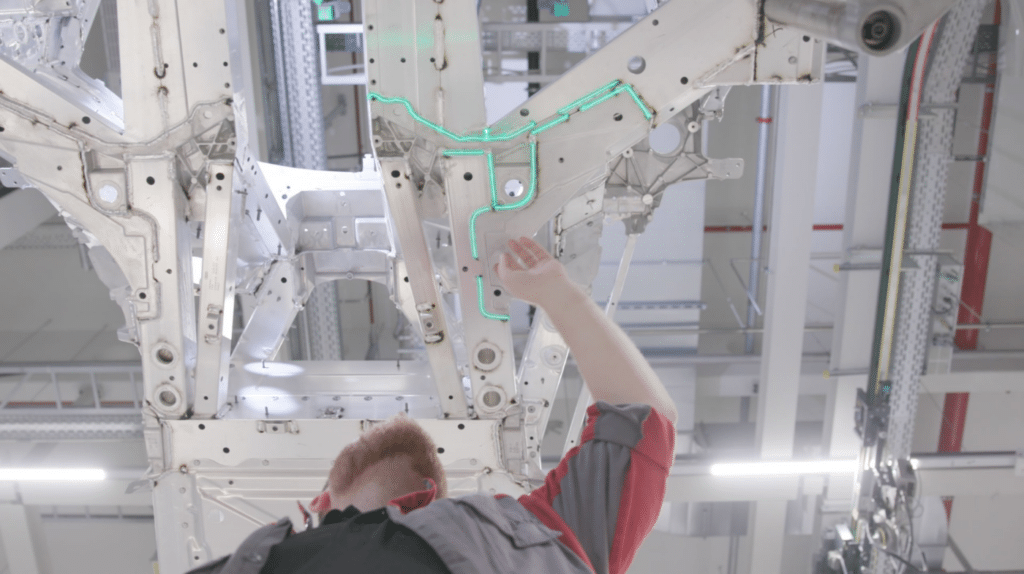
Interior assembly typically involves many manual steps. Laser projectors for visual worker guidance support these processes by projecting assembly positions, contours, or target areas directly onto components, enabling a process-reliable, repeatable execution.
Roof Liner and Sound Absorption Mats
To pre-assemble the car roof liner, retaining clips and cables must be positioned precisely. A laser projector show the required positions directly onto the underside of the component.
A similar approach is used for vehicle sound insulation. To reduce vibration and noise, sound absorption mats are bonded, for example, in the boot. The laser projects the outline of the sound absorption mat, so it can be aligned accurately and bonded consistently.
Car Seat Covers and Windscreens
When producing car seat covers, lasers provide visual guidance across several steps. A laser line supports the precise alignment of fabric or leather panels on the lay-up table. During stitching, the laser visualizes the seam path.
In windscreen installation, where visible markings are increasingly avoided, a laser projects the target contours for spacer tape and the adhesive bead directly onto the glass, replacing rigid, error-prone templates that are also labour-intensive.

Special Applications: Caravan Construction and Blank Positioning on Pallets
Laser projectors also support production processes in specialised niche areas of automotive manufacturing. In caravan construction, they are used to precisely visualize positions for braces, fasteners and electrics in wall and floor elements.
When loading pallets for pressed parts, laser projection indicates the intended plug-in positions directly on the blank. This shortens changeover time significantly because manual measuring and alignment are largely eliminated.
Automotive Logistics: High-Accuracy Picking with Laser Projection
In automotive logistics, high accuracy in spare-parts picking is critical. Despite screen prompts, mis-picks and incorrect deliveries can occur in day-to-day operations. Laser projectors address this by clearly marking the correct pick location or container directly on the shelf (pick-by-light or pick-by-laser). This visual guidance reduces picking errors significantly and supports more flexible staffing, as processes are quicker to learn and mix-ups occur less often.
Conclusion: Process Reliability and Efficiency in Automotive Manufacturing Through Laser Technology
The application examples across bodywork, interior assembly and automotive logistics show that laser technology can make a tangible contribution to reliable and repeatable processes in automotive production. Depending on the use case, lasers are used either as a tool in material processing (such as welding) or as an optical assistance system in assembly, inspection and logistics. In welding, lasers achieve a high level of precision and complement conventional methods where their advantages in quality, process stability and automation are particularly effective. Laser projectors can replace rigid templates in assembly, improving flexibility and safety by projecting target contours and positions as a digital guide directly onto the component. For quality inspection, laser-supported machine vision enables actual comparisons, while pick-by-laser in logistics reduces mis-picks and makes workflows easier to learn.
Would you like to assess which Z-LASER solution can optimise your manufacturing processes? Contact us for a consultation. Our experts will help you select the right solution.
Frequently Asked Questions
In bodywork operations, lasers are used in combination with machine vision for automated quality control, for example to check weld seams and weld points. This enables reliable verification and documentation of position, seam path and completeness after welding, supporting consistent quality.
A laser projector visualizes the target positions for retaining clips and cable looms directly onto the underside of the car roof liner. Operators can immediately see where each part must be fitted, which speeds up assembly and reduces mistakes.
When producing car seat upholstery, lasers provide visual guidance across multiple steps: aligning fabric or leather panels on the lay-up table, visualizing the seam path during stitching, and supporting accurate positioning-
Yes. In automotive logistics, pick-by-light or pick-by-laser uses laser projectors to clearly mark the correct pick location or container on the shelf. This reduces mis-picks and incorrect deliveries and supports very high picking accuracy.
The main benefit is improved precision and efficiency across multiple process steps. Lasers reduce manual measuring and set-up effort, support repeatable assembly workflows, replace physical templates in many applications, and – combined with machine vision – enable reliable, traceable quality inspection.