Customer Success Story

Laser-Assisted Weld Seam Inspection for Audi Sports Cars

With state-of-the-art laser projection, Audi achieves 100% weld seam inspection in R8 production – ensuring greater efficiency, precision, and quality in aluminum body manufacturing.
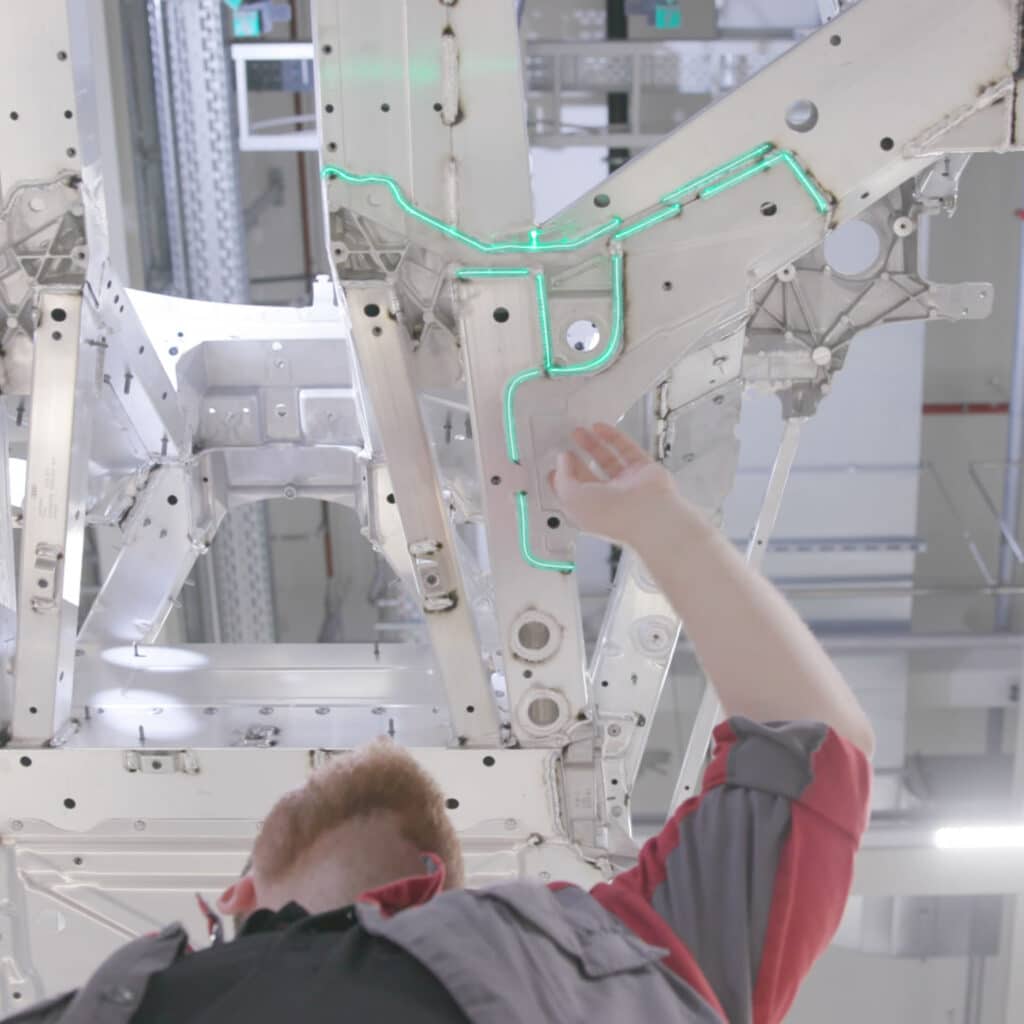
audi r8 laser projection on chassis laser projector z laser

Automotive

Laser Projectors

“Born on the racetrack. Built for the road.”

With this slogan Audi is promoting the R8 series sports car. In the body production of this basic 610 hp car, a laser projection system from the manufacturer Z-Laser in Freiburg assists the staff in the manual inspection of around 1,500 welds per body.

Challenges

At the “Audi Böllinger Höfe” manufactory, the Audi Sport GmbH produces the R8 supercar almost entirely by hand. Each aluminum body contains around 1,500 weld seams that must be inspected with absolute precision — even a single faulty weld seam renders the entire body unusable. The key challenge was to find an inspection method capable of reliably detecting aluminum welds on aluminum surfaces, while ensuring 100% inspection within the production cycle time. Conventional optical systems, image processing, CT, or MRI technologies proved unsuitable. Additionally, limited space and integration constraints within the existing production lines made implementation even more demanding.

Solutions

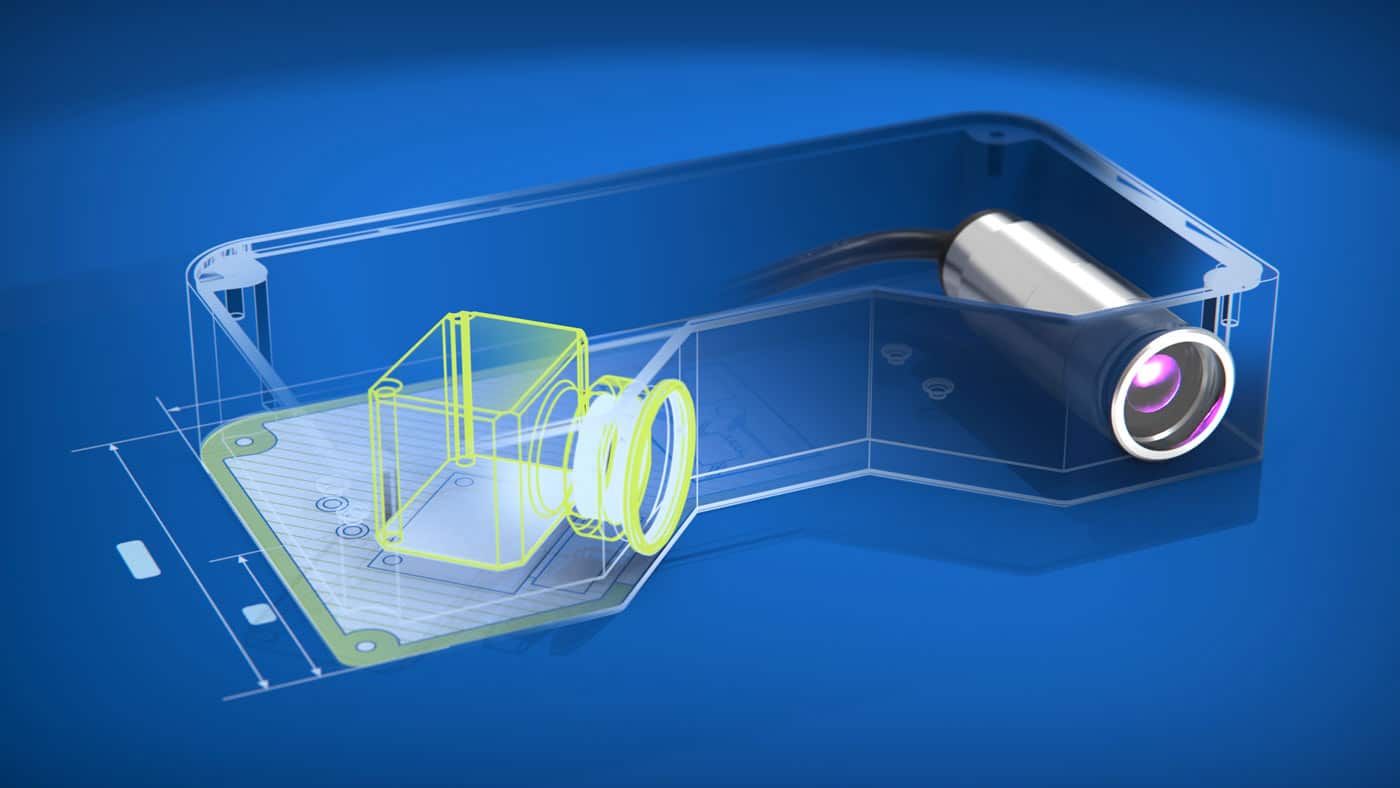
The solution came with a laser projection–based inspection system from Z-LASER. Six LP-HFD2 laser projectors project the precise target positions of the weld seams directly onto the car body, enabling workers to visually compare them with the actual welds. The system is controlled via intuitive software, allowing operators to step through each inspection point like a presentation. This enables every weld seam to be checked in a standardized, repeatable, and error-free manner without disrupting production flow. The system was seamlessly integrated into existing facilities, commissioned within just a few months, and can be easily adapted to new models — allowing Audi to significantly increase both the efficiency and quality of its weld seam inspection process.

Manual production and quality inspection in the production of high-quality car bodies

This is what you find in the Audi Böllinger Höfe factory of Audi Sport. Here, the Audi R8 super car is built almost entirely by hand. The body construction is also a very special factory operation. The R8 factory is designed for small series production and great variety. In the first step, specialists weld the front end, the center floor and the rear end from aluminum castings and extruded profiles, then connect the three modules to the substructure. Robots take over the cold connections. The subsequent quality control of the approximately 1,500 welds per R8 body is also carried out by the employees.


The fact that even with this procedure it was necessary to carry out a one hundred percent control of each individual weld seam with absolutely reliable detection of faulty connections


is something that was indispensable according to Felix Knoll, head of body construction at Audi Sport: “A body with just one single unclean weld seam no longer meets our high Audi quality standards and is therefore not suitable for sale.”


To answer the question of how to perform a one hundred percent check of all welds every day, a colleague of Knoll’s conducted technology assessment and research across the group and investigated various technologies for this pur-pose. The problem was clear: How to check an aluminum weld on an aluminum background? “In our experience, optical methods such as image processing systems which match the whole with a given image, have not been effective previously for this kind of task,” says Knoll. “Other technologies such as computed tomography, MRI or augmented reality were also possible candidates, but in the end they also proved to be inappropriate. In the end we opted for a laser projection system from Z-Laser, considering the many criteria that have to be met.”

Numerous criteria

The criteria mentioned included the requirement that the system had to make it possible to check every weld of every single body within the cycle time in order to avoid delays in the production flow. It was also necessary for the implementation period to fit the conditions in the production of the R8 models, as Knoll explains: “The implementation of the system had to be feasible in terms of time and space. The space in such a plant is naturally always limited. The main difficulty here in our body construction was that we had to integrate the system into an existing plant, i.e. the space for such a laser cell was limited and we had to realize the system with the available space. That’s why we installed suspensions, lifting platforms, and peripherals such as power and data cables so that Z-Laser would be able to put its laser system into operation without any problems.”


In addition to these technical and space constraints, another prerequisite for the realization was that the system had to remain within a specified budget. “However, in view of the large number of welds and the required reliability of the quality inspection we definitely wanted to provide our employees with assistance in testing all welds,” emphasizes Knoll. Already in the technology search phase, he and his colleagues came across Z-Laser, which has specialized in the production of laser sources for innovative customer applications over several years. “At the beginning of 2016, Z-Laser was on-site with a test device for demonstration purposes, and we were quickly convinced that the system presented could meet our requirements.”


Detailed system feasibility studies were followed by final system selection and assembly, and in October 2016, Z-Laser received the order from Audi. Subsequently, the Freiburg-based company assisted Knoll and his team with the integration of the laser system into the plant as well as with its programming. In April 2017, the system was put into operation for testing of bodies for Audi R8 Coupe as the first model variant. Only a short time thereafter, the complete series program could be displayed on this system. The Z-Laser laser system was integrated into the construction space of the plant.

Laser projection shows test points

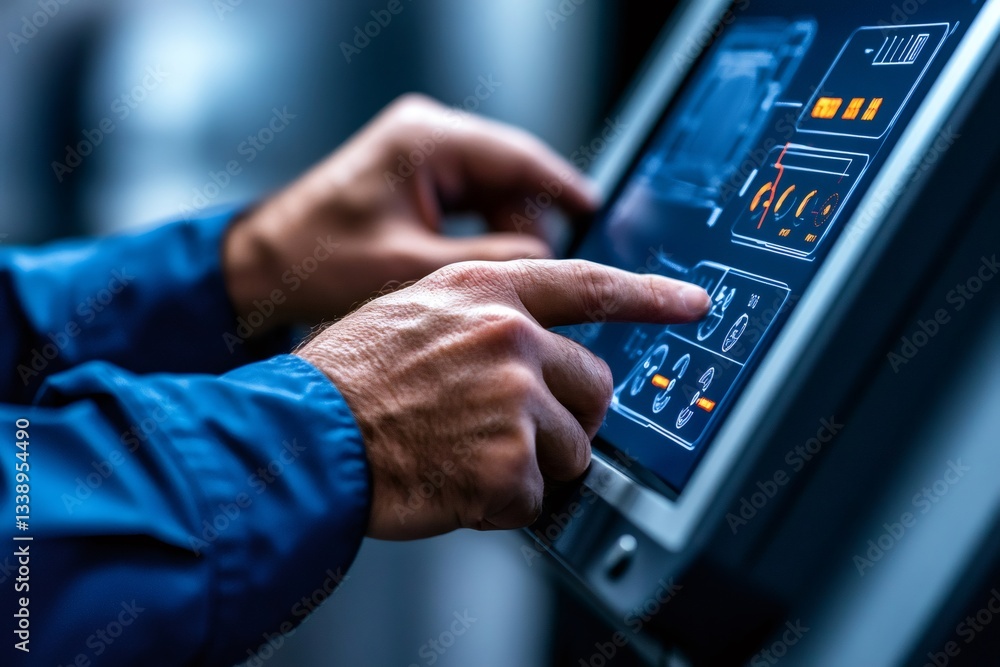
The Audi engineer describes the course of the test as follows: “We map our 3D body dataset in the system, and the Z- Laser system projects this dataset onto the actual body from different directions via a total of six LP-HFD2 laser projectors. For this purpose, the bodies to be checked are first sent to reference points via the provided conveyor equipment. The employee then selects the correct position and the current model and can then click through the steps of the inspection via a remote control of the laser system similar to a PowerPoint presentation. Depending on the position of the weld, a suitable laser projector then shines green laser lines onto the body, thus indicating to the employee the target position with the start and end point of the welds. On this basis, he can compare the projection and the actual weld and easily recognize whether the single weld is present and whether the given length is correct. However, the quality of the weld must be assessed by the employee himself.” A green laser source was chosen to produce a maximum brightness impression on the viewer. In the production process, three employees are responsible for the visual inspection. One checks the welds using the Z-Laser projection system. The other two from the Quality Control Group (QCG) inspect these visually in different stages of production, so that each volume is covered in the 4-eye principle. According to Knoll, employees need to be very experienced in these tasks and not only have to know all production volumes, but also their location in order to be able to identify faulty processes and correct them if necessary.