


Textile printing is a common method in textile finishing used to print textiles and garments. In industrial production, the textile screen printing process is widely used. For this purpose, textile carousels are often used as a type of textile printing machine designed for high throughput. To achieve a consistent, high-quality result, one detail is critical: the precise positioning of each textile on the textile carousel pallet.
To speed up this step and reduce errors, positioning lasers have proven to be an efficient solution. This article explains how positioning lasers in textile printing supports consistent alignment on the pallet using cross projection
The Challenge: Accurate Alignment on the Pallet
Whether it is T-shirt printing for finishing another garment, the print must land in the same location across the entire batch. To achieve this, each textile has to be placed and pulled onto the pallet in the same position and orientation every time. Manual alignment is time-consuming and prone to errors. Even minor deviations can cause a skewed or shifted print and lead to scrap. This is where Z-LASER positioning lasers support the process: they provide a direct visual reference for alignment and help reduce misplacement and offset.
The Solution: Cross Projection for Precise Positioning
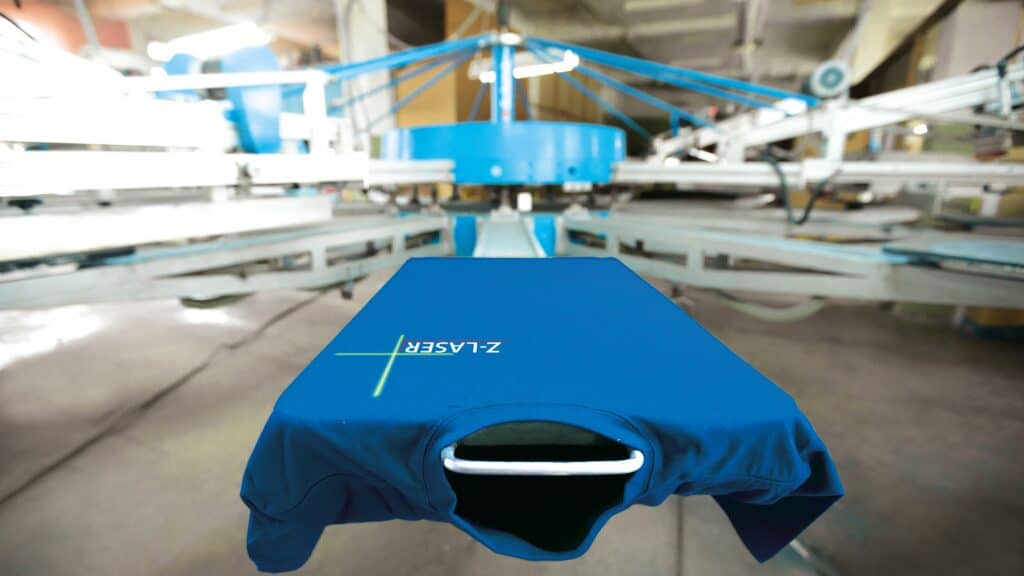
To print on textiles reliably, projecting a laser cross onto the material has proven effective in practice. The two laser lines serve as alignment references. In T-shirt printing, for example, this works as follows:
- One laser line is projected along the T-shirt’s center axis.
- A second laser line serves as an orientation aid for the sleeve insertion points under the armpits.
Key Requirement Lasers
To ensure a clearly visible cross projection, the laser lines must remain easy to see on differently coloured textiles. Depending on the textile colour, a red or green laser line may be more suitable. Brightness control (dimming) can also be beneficial.
Z-LASER Recommendations for Textile Printing
For the screen printing process in textile printing, and depending on mounting height, we recommend red, dimmable positioning lasers from the ZT series or green positioning lasers from the ZD series. Both are available as line lasers or cross lasers.
Red Positioning Lasers from the ZT Series
Red lasers can be a cost-effective option, provided visibility on the textile is sufficient.
- Line laser: Z5T-645-lg90, Z3T-635-lg90.
- Cross laser: Z5T-645-x30 or Z3T-635-x30 (30° opening angle in x and y), alternatively x60 variants with 60° opening angle in each axis.
Green Positioning Lasers from the ZD Series
Green laser lines are generally perceived better by the human eye and provide good contrast on many textile colours.
- Line laser: Z5D-520-lg90.
- Cross laser: Z5D-520-x52g (52° opening angle in x and y).


ZD Module
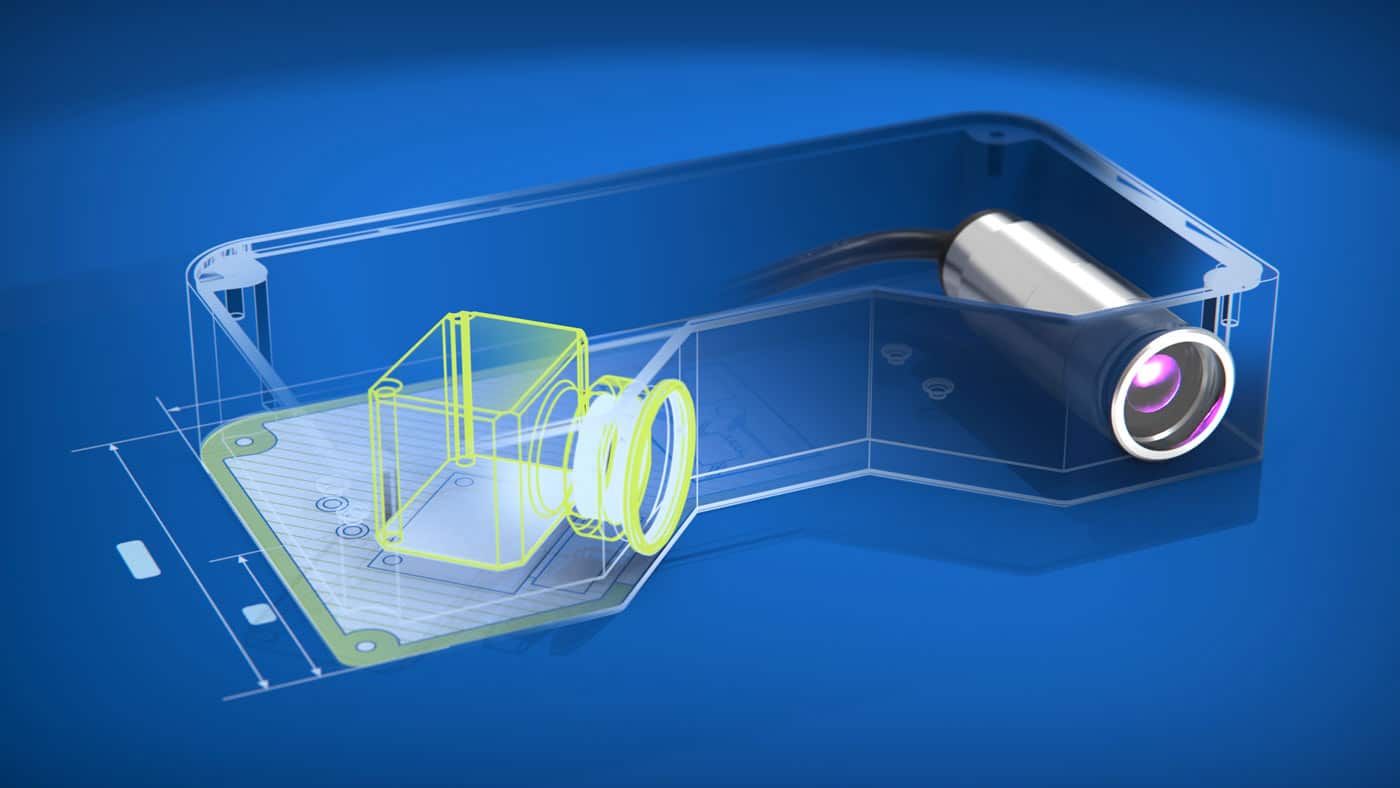
The ZD is a universal mini laser module with a diameter of only 11 mm, making it the perfect choice for devices and machines with limited installation space. Its compact form factor delivers impressive visibility, and it is available in line, dot, or cross projections. Typical applications include woodworking, stone processing, textile production, tire manufacturing, and metalworking—industries where precise alignment is needed even under tight spatial conditions. Available from green (520 nm, 10 mW) too red (635 nm, 15 mW) versions, it combines flexibility with reliable performance.
Learn MoreConclusion: Printing Textiles Faster, More Precisely, and More Efficiently
Using positioning lasers in textile printing demonstrates how a key step in textile finishing can be supported in a reliable and repeatable way. The laser projection provides a visual reference directly on the material and helps ensure textiles are placed consistently on the pallet. This reduces alignment errors and offset and supports higher productivity of the textile printing machine. This applies both to batch production and to individual print orders.
Not sure which laser is right for your application? Contact us. We will be happy to help you select the right laser solution.
Frequently Asked Questions
Positioning lasers project a laser cross directly onto the machine pallet. This helps operators align each T-shirt quickly and consistently, supporting a uniform print result.
A cross laser provides two reference lines (horizontal and vertical). This allows both the textile’s center axis and a second alignment reference (for example, underarm sleeve position) to be aligned at the same time.
The best choice depends on textile colour, contrast, and ambient light. Green lines are often perceived as easier to see, while red can be a cost-effective option when visibility is sufficient.
Screen printing is a common textile printing method in which ink is pushed through a fine mesh screen onto the textile using a squeegee. Areas that should not be printed are blocked out. Each colour in the design typically requires a separate screen.