



The sliding table saw (also known as format saw) is standard equipment in woodworking shops and is commonly used for cutting solid wood and panel materials. It is also frequently used for edging rough-sawn lumber. In this step, the irregular bark edge is removed, producing a straight board with parallel long edges that can be processed further. To support this operation, line lasers have proven effective as a positioning and alignment aid. This guide explains how line lasers make working at the sliding table saw more efficient by marking the cut line on the workpiece and enabling accurate execution.
The Function: How the Laser Simulates the Cut Line
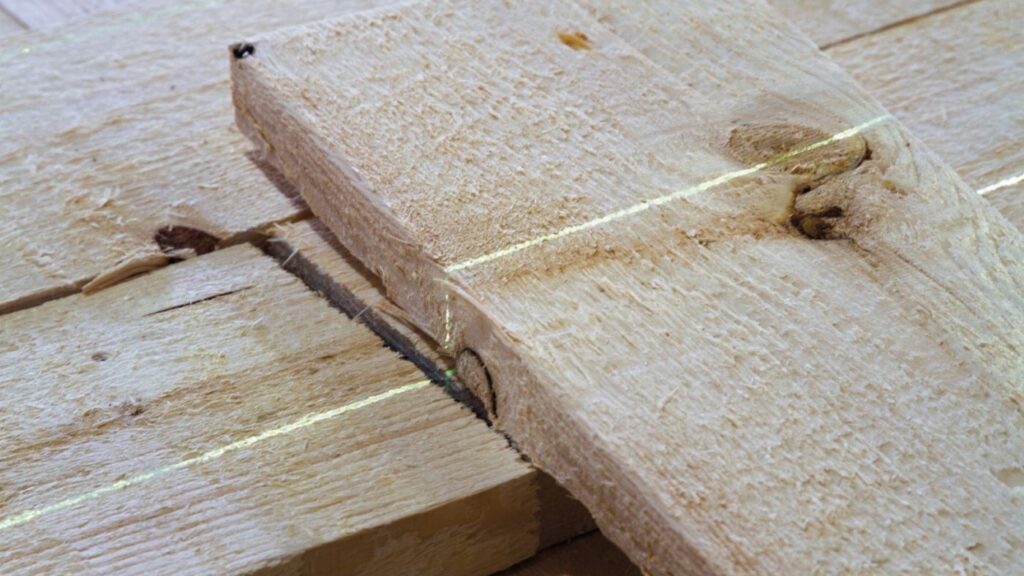
A line laser enhances the sliding table saw function during edging. It projects a clearly visible red or green laser line onto the board, indicating where the saw blade is intended to cut. This cut line marking helps the operator align the material precisely and work closer to the live edge. The result is a clean cut achieved faster, with fewer errors and improved material utilization.
Mounting Options for Retrofitting a Line Laser on a Format Saw
Two mounting variants are commonly used when retrofitting a sliding table saw with a line laser. Each option has specific advantages and disadvantages.
Installation on the Workshop Ceiling Above the Saw
With this option, the ideal laser position is above the saw blade. To achieve the required cut length (for example, 3,000 mm) across which the laser line should remain visible, a minimum installation height of 1,000 mm above the saw table is required. The laser is aligned at a slight angle (approximately 45° to the horizontal), so the line runs away from the blade toward the operator. Using Z-LASER’s BD laser holder and mounts from the H0 series holders, which provide the necessary degrees of adjustment, the line laser can be positioned and aligned optimally.
For setting and fine adjustment, a sufficiently long test cut is performed, and the laser is aligned so that the projected line matches the workpiece edge. At the same time, it must be ensured that the line on the end face of the material also runs vertically (plumb). Only then is it guaranteed that the position of the laser line is maintained even when material heights vary. The disadvantage of this mounting option is that it must be checked repeatedly to see whether the line is still running correctly. If the ceiling moves (for example, a wooden ceiling under the weight of snow), the laser may become misaligned.
Ceiling Mounting: Pros and Cons at Glance
- Advantage: A long, clearly visible laser line across the full cut length.
- Disadvantage: If the ceiling moves (for example, roof beams under snow load), the alignment should be checked at regular intervals.
Installation on the Chip Hood
In this mounting option, the laser is installed much lower. As a result, the projected laser line is shorter, and illumination is less uniform. Z-LASER’s ZM18-lhi90a series is designed for low installation situations. Due to weight constraints, ZM18 series models or smaller are suitable for this setup. The line laser can be screwed in place with a swivelling holder of the H2 series. Power is supplied either via a separate WPS plug-in power supply or directly through the machine control system with 24 VDC.
Chip Hood Mounting: Pros and Cons at Glance
- Advantage: The machine-mounted installation supports stable alignment. Power is supplied via WPS or directly via the 24 VDC machine control.
- Disadvantage: The laser line is shorter, illumination is slightly irregular.
Z-LASER Recommendation: The Right Laser for Your Sliding Table Saw
Line lasers for wood processing must be robust and, in particular, dustproof. To date, red lasers are most commonly used because they are easy to see on most wood surfaces. In very bright working environments, for instance, if the machine is located directly next to a window or under a skylight, green lasers are preferable.
Z-LASER recommends the following laser modules for the installation on the ceiling and the chip hood:
- Ceiling: Red line lasers with 10 mW or 15 mW from the ZR or ZPT-F series.
- Dust hood: Compact red or green lasers from the ZM18-lhi90a series with 10 mW output power. These lasers are designed for low installation situations.

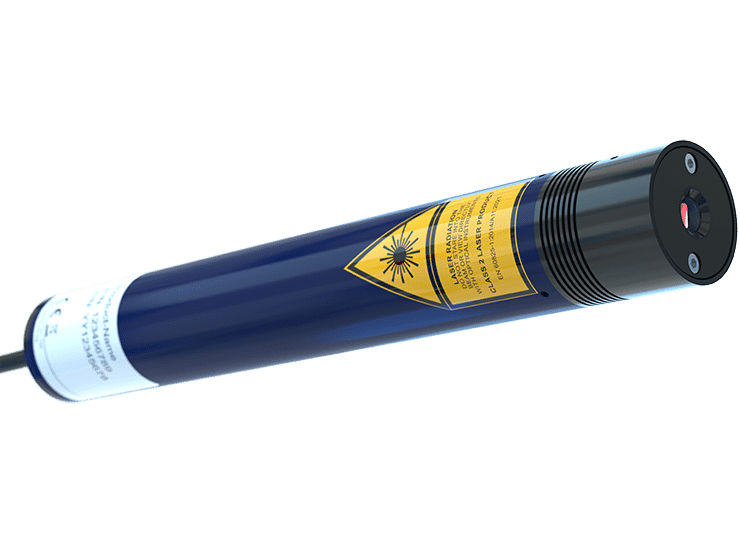
ZR Module
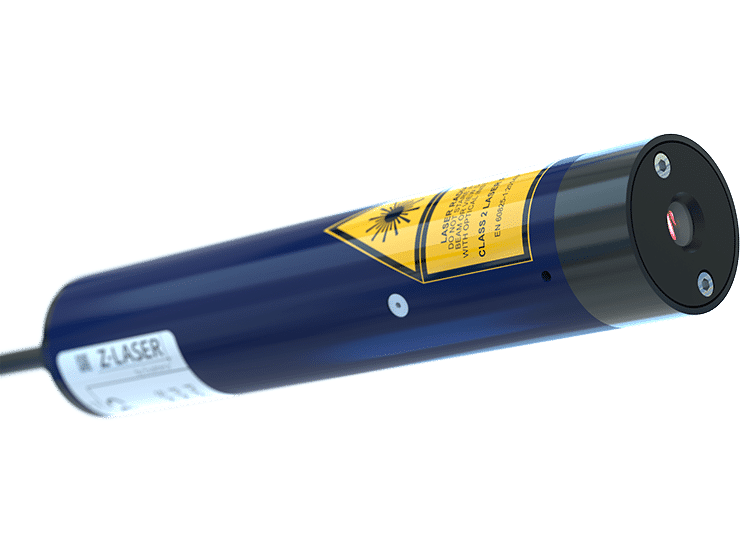
The ZR is a red positioning laser with an asymmetric optic that projects especially long and homogeneous lines for precise alignment. With an optical output of up to 40 mW at 635 nm, it provides excellent visibility even across large working areas. An integrated heavy-duty power supply with a wide input range (90–265 VAC) ensures strong interference resistance and reliable operation under demanding industrial conditions. Compact dimensions of Ø 40 mm x 200 mm make it easy to integrate into machines and systems. Typical applications include textile tables and circular saws, where long and uniform line projection is critical for accuracy.
Learn More
ZPT-F Module
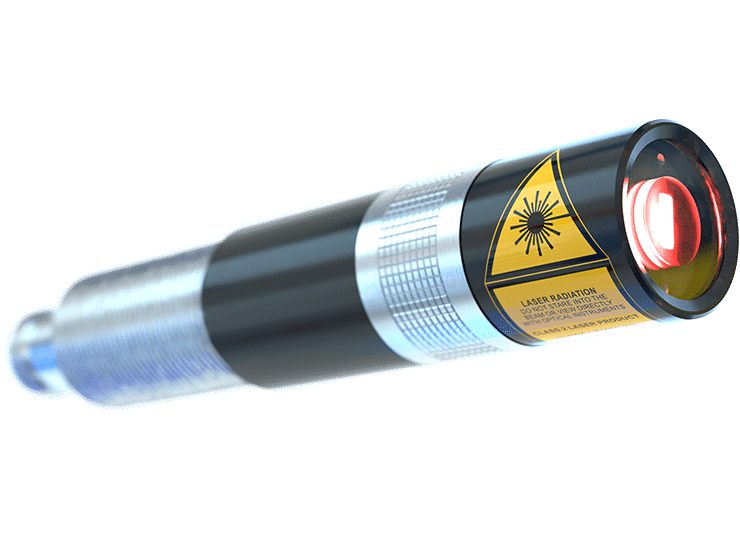
The ZPT-F is the only positioning laser worldwide with Peltier cooling and a temperature-stabilized laser source. This innovation guarantees consistently high visibility and precision, even in tough production environments. Thanks to the integrated heavy-duty power supply and adjustable focusing unit, installation into different machine setups is straightforward and flexible. Its rugged design and easy maintenance ensure long service life with minimal downtime. With a proven track record over many years, the ZPT-F delivers reliability and accuracy you can count on.
Learn More
ZM18 Module
The ZM18 is an industry-grade laser module that, with its compact sensor-style design, integrates easily into existing machines and systems. Offering high flexibility its ZM18B and ZM18B3 Variants are suitable for a wide range of positioning applications. Machine vision applications across different industries are made possible due to its ZM18S3 Variant. Delivering non-stop reliable meassuring results. The built-in, user-friendly focusing optics allow quick adjustments to varying working distances and requirements. Thanks to its robust construction, the ZM18 is ideal for reliable continuous use in demanding industrial environments.
Learn MoreConclusion: Higher Precision and Material Savings with Line Lasers
For woodworking shops, a line laser is a worthwhile investment. After retrofitting, working with a sliding table saw becomes more precise, faster, and more economical. Cut line marking with a laser line allows operators to align the material accurately before edging and make accurate cuts. This reduces waste and helps prevent the loss of valuable material.
Want to retrofit your sliding table saw? Contact us for a no-obligation consultation to select the right laser and mounting solution for your woodworking shop.
Frequently Asked Questions
A sliding table saw is a table saw with a sliding carriage designed for precise, accurate, and repeatable cuts in panel materials and solid wood. A common application is edging (also called trimming), meaning creating a straight edge on an unedged board by removing the irregular live edge.
A line laser marks the cut line directly on the workpiece as a laser line. This helps the operator align the material accurately before edging, reduce waste, and improve repeatability.
The core difference is the sliding carriage. It guides the workpiece safely and precisely past the saw blade, enabling long, accurate, and angle-true cuts that are significantly harder to achieve on a basic table saw.
Yes. With flexible mounting options either on the ceiling or directly on the machine’s chip hood, virtually any sliding table saw can be retrofitted with a line laser.